Key Takeaways:
- Inpatient PTSD Treatment Centers: These centers provide structured, 24/7 residential care for veterans struggling with severe PTSD, co-occurring addiction, or emotional crises. They offer intensive therapy, medical monitoring, and a safe environment for healing.
- Signs a Veteran May Need Inpatient Care: Veterans experiencing severe symptoms like flashbacks, emotional numbness, or suicidal thoughts, or those with co-occurring substance use, may benefit from inpatient treatment.
- Evidence-Based and Holistic Therapies: Programs include therapies like EMDR, CBT, and DBT, alongside holistic approaches like yoga, mindfulness, and expressive arts to support mind-body healing.
- Veteran-Focused Care Matters: Specialized centers like Aliya Veterans understand military culture, combat trauma, and reintegration challenges, offering peer support and family involvement for comprehensive recovery.
Question:
Can inpatient PTSD treatment centers help me overcome addiction and mental health issues?
Answer:
Inpatient PTSD treatment centers provide veterans with a structured, supportive environment to address severe trauma symptoms, co-occurring addiction, and emotional crises. These programs offer 24/7 care, evidence-based therapies like EMDR and CBT, and holistic approaches such as yoga and mindfulness to promote healing. Veterans benefit from peer support and trauma-informed care tailored to military culture, helping them process combat trauma, moral injury, and reintegration challenges. Aliya Veterans specializes in veteran-focused treatment, offering a full continuum of care, including medical detox, residential programs, and aftercare planning. By addressing both PTSD and addiction, these centers provide the stability and tools veterans need for long-term recovery. If you or a loved one is struggling, seeking professional support early can make a life-changing difference. Aliya Veterans is here to guide you toward healing with compassion and expertise.
Post-traumatic stress disorder can affect every part of a veteran’s life: sleep, relationships, work, physical health, emotional control, and the ability to feel safe. For some veterans, weekly therapy or outpatient support is not enough to manage severe symptoms. When PTSD begins to feel overwhelming, inpatient PTSD treatment centers can provide the structure, safety, and clinical care needed to begin healing.
Inpatient PTSD treatment gives veterans a stable place to step away from daily stressors and focus fully on recovery. These programs are especially helpful for veterans struggling with severe trauma symptoms, co-occurring addiction, anxiety, depression, emotional burnout, or repeated crises.
At Aliya Veterans, we understand that trauma recovery is not about “getting over it.” It is about rebuilding safety, trust, identity, and hope. Veteran-focused, trauma-informed care can help service members and first responders process painful experiences while feeling understood, respected, and supported.
What Are Inpatient PTSD Treatment Centers?
Understanding Residential PTSD Care
Inpatient PTSD treatment, also called residential PTSD treatment, is a structured level of care where clients live on-site while receiving intensive mental health support. Instead of attending therapy once or twice a week, veterans participate in daily programming designed to address trauma, stabilize symptoms, and build healthier coping skills.
In a residential setting, veterans receive:
- 24/7 supervision and support
- A structured daily schedule
- Individual and group therapy
- Psychiatric and medical monitoring when needed
- Peer support from others in treatment
- A calm, therapeutic environment
- Case management and discharge planning
This level of care can be especially helpful when PTSD symptoms have become difficult to manage at home. Many veterans search for “PTSD treatment near me” when they reach a breaking point, but the right program is not always the closest one. The best fit is often a center that understands military culture, trauma, addiction, and long-term reintegration.
Aliya Veterans offers specialized care for veterans seeking mental health and substance use support, with programs designed around the unique experiences of military service.
How Inpatient PTSD Treatment Differs From Outpatient Care
Both inpatient and outpatient care can support PTSD recovery, but they serve different needs.
Inpatient PTSD treatment usually includes:
- Full-time residential support
- Daily therapy and recovery activities
- A structured, distraction-free setting
- Medical and psychiatric monitoring
- Support during emotional crises
- Intensive trauma-focused treatment
Outpatient treatment usually includes:
- Flexible scheduling
- Therapy while living at home
- Fewer weekly clinical hours
- More independence during treatment
- Lower intensity support
Outpatient care may work well for veterans with stable housing, strong support systems, and manageable symptoms. Inpatient care may be a better fit for veterans who feel unsafe, overwhelmed, isolated, emotionally numb, or unable to function in daily life.
For veterans facing complex trauma, severe PTSD, or co-occurring addiction, residential treatment programs can provide the time and structure needed to begin deeper healing.
Signs a Veteran May Need Inpatient PTSD Treatment
PTSD does not always look the same from person to person. Some veterans experience visible distress, while others seem calm on the outside but feel trapped inside. Recognizing when symptoms have become severe is an important step toward getting the right care.
Severe PTSD Symptoms
A veteran may benefit from inpatient PTSD treatment if they are experiencing symptoms such as:
- Frequent flashbacks or intrusive memories
- Nightmares or fear of sleeping
- Panic attacks
- Hypervigilance or feeling constantly “on guard”
- Emotional numbness
- Isolation from loved ones
- Intense anger or irritability
- Difficulty trusting others
- Shame, guilt, or moral injury
- Trouble functioning at work, school, or home
Some families describe seeing “PTSD eyes” or a “PTSD stare” in their loved one: a distant, frozen, or guarded look that may appear during emotional shutdown, dissociation, or traumatic recall. While these are not clinical terms, they can reflect how trauma shows up in the body and face. Loved ones may also search for PTSD images or PTSD pictures online to better understand what they are seeing. However, PTSD is not always visible. A person can be deeply wounded even when they appear composed.
Some veterans also cope through dark humor or share a PTSD meme because humor can feel safer than vulnerability. While humor can be a way to connect, it should not replace professional support when symptoms are disrupting life.
PTSD and Co-Occurring Substance Use
Many veterans use alcohol or drugs to manage trauma symptoms. Substances may temporarily numb flashbacks, anxiety, or insomnia, but over time they often make PTSD worse. This can create a painful cycle of avoidance, relapse, shame, and worsening mental health.
Signs of co-occurring PTSD and substance use may include:
- Drinking or using drugs to sleep
- Using substances to calm panic or anger
- Increased tolerance or withdrawal symptoms
- Hiding substance use from loved ones
- Relapsing after attempts to stop
- Feeling unable to face trauma without substances
Integrated dual diagnosis care is essential when PTSD and addiction occur together. Treating only one condition can leave the other untreated, increasing the risk of relapse. Aliya Veterans provides PTSD and addiction treatment for veterans that addresses both trauma and substance use with compassion and clinical structure.
When Safety and Stability Become Concerns
Inpatient PTSD treatment may be necessary when safety, stability, or daily functioning is at risk. This includes situations such as:
- Suicidal thoughts or self-harm urges
- Emotional crisis or severe depression
- PTSD psychosis symptoms, such as paranoia or losing touch with reality
- Repeated relapses
- Inability to maintain work or relationships
- Escalating anger or risky behavior
- Severe sleep deprivation
- Feeling unable to stay safe alone
PTSD psychosis is not common for everyone with PTSD, but severe trauma symptoms can sometimes include paranoia, dissociation, hallucination-like experiences, or intense fear that feels disconnected from the present moment. These symptoms deserve immediate professional support.
A structured healing environment can help veterans stabilize, regain clarity, and begin treatment without the constant pressure of managing symptoms alone.
Get confidential help from our addiction and mental health treatment facilities located across the United States. Call to join one of our quality programs today!
Speak With Our Admissions TeamWhat Happens in an Inpatient PTSD Treatment Center?
Inpatient PTSD care is designed to provide stability, connection, and consistent clinical support. While each program is different, most residential treatment centers include a mix of therapy, education, wellness services, and discharge planning.
Daily Structure and Clinical Support
A typical day in residential PTSD treatment may include:
- Individual therapy sessions
- Group counseling
- Trauma education
- Peer support with fellow veterans
- Medication management
- Psychiatric evaluation when needed
- Wellness and recovery activities
- Fitness or movement
- Mindfulness practices
- Case management
- Discharge and aftercare planning
Structure is one of the most important parts of inpatient treatment. PTSD can make life feel chaotic and unpredictable. A clear schedule helps the nervous system begin to feel safer. Over time, consistency can support emotional regulation, better sleep, and healthier daily routines.
For veterans who need medically supervised support before trauma work begins, medical detox may be the first step. Detox can help stabilize withdrawal symptoms before entering residential treatment.
Evidence-Based PTSD Therapies
High-quality PTSD treatment centers use evidence-based therapies that are proven to help people process trauma, reduce symptoms, and build coping skills. At Aliya Veterans, treatment may include several therapeutic approaches based on each veteran’s needs.
Common evidence-based PTSD therapies include:
EMDR Therapy
Eye Movement Desensitization and Reprocessing, or EMDR, helps the brain reprocess traumatic memories so they feel less overwhelming. EMDR does not erase the memory, but it can reduce the emotional charge connected to it.
Cognitive Behavioral Therapy
Cognitive Behavioral Therapy, or CBT, helps veterans identify patterns of thought and behavior that may keep PTSD symptoms active. CBT can help with anxiety, avoidance, anger, and depression.
Cognitive Processing Therapy
Cognitive Processing Therapy, or CPT, focuses on trauma-related beliefs. Many veterans carry guilt, shame, self-blame, or a changed view of the world after traumatic events. CPT helps challenge and reshape these beliefs in a safe, structured way.
Dialectical Behavior Therapy
Dialectical Behavior Therapy, or DBT, teaches skills for emotional regulation, distress tolerance, mindfulness, and healthier relationships. DBT can be especially helpful for veterans who experience intense emotions, impulsive behavior, or relationship conflict.
Acceptance and Commitment Therapy
Acceptance and Commitment Therapy, or ACT, helps veterans relate differently to painful thoughts and feelings while reconnecting with personal values. ACT supports meaningful action even when trauma symptoms are present.
Aliya Veterans offers specialized trauma therapy for veterans as part of a whole-person approach to healing.
Holistic Therapies in Residential PTSD Treatment
PTSD affects the mind and body. Trauma can keep the nervous system in survival mode, even when danger has passed. Holistic therapies help veterans reconnect with their bodies, reduce stress, and build a sense of calm.
Holistic support in residential PTSD treatment may include:
- Yoga and gentle movement
- Mindfulness practices
- Meditation and breathwork
- Fitness support
- Nutrition guidance
- Stress reduction techniques
- Expressive arts therapy
- Massage and wellness services
- Sleep hygiene education
These therapies do not replace clinical trauma treatment, but they can support it. Many veterans find that mind-body practices help reduce hypervigilance, improve sleep, and create moments of peace.
Why Veteran-Focused PTSD Treatment Centers Matter
Not every treatment center is designed for veterans. While many clinicians are skilled and caring, veterans often benefit from care teams that understand military service, combat exposure, first responder culture, moral injury, and the challenges of returning to civilian life.
Military Culture and Trauma Understanding
Veterans may be more willing to open up when they do not have to explain every part of military culture. A veteran-focused treatment center understands that trauma may come from many experiences, including:
- Combat exposure
- Military sexual trauma
- Loss of fellow service members
- Moral injury
- Survivor’s guilt
- Training accidents
- Repeated high-stress deployments
- Reintegration challenges
- Chronic hypervigilance after service
Clinicians trained in military culture can help reduce shame and build trust. They recognize that symptoms such as anger, emotional distance, and avoidance are not character flaws. They are often survival responses that once served a purpose but now interfere with daily life.
Veterans living with trauma and stress-related symptoms can learn more about post-traumatic stress disorder treatment and how professional care can support recovery.
The Value of Peer Support
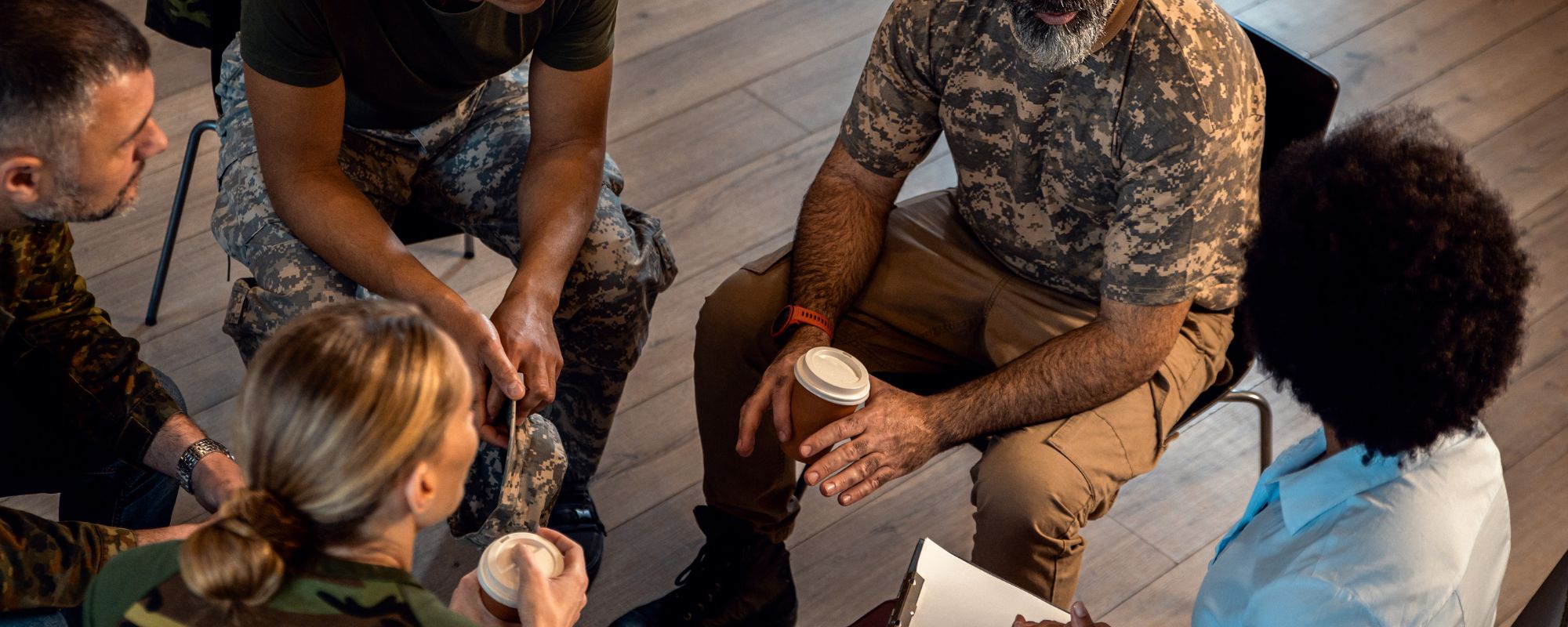
Healing alongside other veterans can be powerful. Peer support helps reduce isolation and stigma. It also creates a sense of accountability and connection.
In veteran-focused inpatient care, peers may understand things that are hard to explain to others. They may recognize the guarded body language, the emotional shutdown, the gallows humor, or the silence that comes when words feel too heavy. This shared understanding can help veterans feel less alone.
Peer support may help veterans:
- Practice honesty in a safe setting
- Build trust with others again
- Challenge isolation
- Learn from others in recovery
- Feel understood without judgment
- Rebuild a sense of belonging
Family Healing and Reintegration
PTSD affects families, too. Loved ones may feel confused, scared, rejected, or exhausted. They may not understand why a veteran avoids crowds, reacts strongly to noise, struggles with sleep, or seems emotionally distant.
Family support can help repair communication and rebuild trust. In many inpatient PTSD treatment centers, family involvement may include:
- Family therapy sessions
- Education about PTSD symptoms
- Communication skills
- Boundary setting
- Relapse prevention planning
- Support for reintegration after treatment
Healing does not end when residential care ends. Veterans often need continued support as they return to family life, work, and community responsibilities. A strong aftercare plan helps make that transition safer and more sustainable.
Looking for quality treatment for substance abuse and mental health that’s also affordable? Aliya Veterans treatment facilities accept most major insurance providers. Get a free insurance benefits check now!
Check Your CoverageWhat Veterans Say About Inpatient PTSD Treatment
Real Experiences From Veteran Communities
Many veterans describe inpatient care as a turning point. For some, it is the first time they feel safe enough to speak honestly about trauma. For others, it is the first time they meet people who truly understand what they have carried.
Veterans often say that residential treatment helped them:
- Slow down enough to face what they had avoided
- Understand their symptoms without shame
- Learn coping skills that actually work
- Build trust with peers and clinicians
- Address addiction and trauma together
- Feel hope after years of survival mode
One of the most meaningful parts of inpatient treatment is the chance to step away from the noise of daily life. In that space, veterans can begin to process trauma with professional support rather than carrying it alone.
Challenges Veterans Sometimes Face
Inpatient care can also feel uncomfortable at first. Many veterans are used to pushing through pain, staying guarded, and relying on self-control. Residential treatment asks for honesty, vulnerability, and participation.
Common challenges may include:
- Adjusting to a structured schedule
- Feeling uncomfortable in group therapy
- Missing home or family
- Facing trauma memories
- Learning to trust staff and peers
- Letting go of unhealthy coping habits
Program quality can also vary between facilities. Some PTSD treatment centers offer strong trauma-informed care, while others may not have specialized veteran programming. This is why it is important to choose a reputable center with licensed clinicians, evidence-based treatment, and experience working with veterans.
How Long Does Inpatient PTSD Treatment Last?
The length of inpatient PTSD treatment depends on the severity of symptoms, co-occurring conditions, safety needs, and progress in care. There is no single timeline that works for everyone.
Typical Residential PTSD Program Lengths
Common program lengths include:
- Short-term stabilization: Designed to help veterans regain safety and emotional stability during a crisis.
- 30-day residential treatment: A focused period of intensive therapy, structure, and symptom support.
- 60- to 90-day extended care: More time for deeper trauma work, addiction treatment, and coping skill development.
- Long-term recovery programs: Helpful for severe trauma, complex PTSD, chronic relapse, or co-occurring mental health disorders.
Complex PTSD residential treatment may require a longer timeline because symptoms often come from repeated or prolonged trauma. Veterans with complex PTSD may struggle with emotional regulation, trust, identity, relationships, and deep feelings of shame. Longer treatment gives the nervous system more time to stabilize and allows therapy to move at a safer pace.
Why Longer Engagement Often Improves Outcomes
PTSD recovery takes time. Trauma therapy should not be rushed, especially when symptoms are severe. Longer engagement in treatment can help veterans:
- Build trust with their care team
- Learn and practice coping skills
- Process trauma safely
- Address addiction or depression
- Improve emotional regulation
- Strengthen family communication
- Create a realistic aftercare plan
Residential treatment is not only about symptom relief. It is about preparing veterans for life after treatment with tools, support, and a plan they can use.
What to Look for in Inpatient PTSD Treatment Centers
Choosing a treatment center is a serious decision. Veterans and families deserve clear answers, compassionate support, and high-quality care.
Questions to Ask Before Choosing a Program
Before entering treatment, consider asking:
- Does the center specialize in veterans?
- Are clinicians trained in trauma-informed care?
- Does the program treat PTSD and addiction together?
- Are evidence-based trauma therapies offered?
- Is psychiatric care available?
- What levels of care are included?
- Is medical detox available if needed?
- Does the facility provide aftercare planning?
- Is family involvement encouraged?
- What does a typical day look like?
- How does the center support reintegration after treatment?
If you are comparing PTSD treatment centers, look beyond location and amenities. A peaceful setting can help, but clinical quality matters most. The right program should understand trauma, provide structure, and treat each veteran with dignity.
Accreditation and Clinical Standards
Reputable inpatient PTSD treatment centers should offer:
- Licensed clinicians
- Psychiatric support when appropriate
- Trauma-informed treatment models
- Evidence-based programming
- Integrated dual diagnosis care
- Clear safety protocols
- Ethical admissions practices
- Discharge and aftercare planning
- National accreditation or strong quality standards
Veterans should never feel pressured, dismissed, or treated like a diagnosis. The best programs see the whole person and build care around their needs, history, strengths, and goals.
Aliya Veterans provides care for trauma and stress-related disorders with a focus on long-term healing, not short-term symptom management alone.
How Aliya Veterans Supports Inpatient PTSD Recovery
Aliya Veterans offers compassionate, veteran-centered care for those living with PTSD, addiction, and co-occurring mental health conditions. Our approach is rooted in respect, clinical excellence, and a deep understanding of how trauma affects the whole person.
Veteran-Centered Residential PTSD Treatment
Aliya Veterans provides structured inpatient and residential support for veterans and first responders who need a safe, focused environment for healing. Our team understands that military trauma can be layered and complex. We work with each person to build a treatment plan that supports their symptoms, history, and recovery goals.
Our care may include:
- Veteran-focused residential programming
- Trauma-informed clinical support
- Individual and group therapy
- Integrated PTSD and substance use treatment
- Peer support and community connection
- Military cultural understanding
- Holistic wellness services
- Discharge and aftercare planning
Through residential treatment at Aliya Veterans, veterans can receive intensive support in an environment designed to promote safety, stability, and lasting change.
Full Continuum of Care
Recovery often works best when veterans have access to multiple levels of care. Needs can change over time, and treatment should be flexible enough to support each stage of healing.
Aliya Veterans offers a full continuum of care, including:
- Medical detox
- Residential treatment
- Partial hospitalization programs
- Intensive outpatient programs
- Outpatient support
- Aftercare planning
- Telehealth options
- Nationwide treatment access
This continuum helps veterans move through treatment with support instead of feeling alone after one level of care ends. For some, detox may come first. For others, residential care is the starting point. Many continue with step-down support after inpatient treatment to strengthen recovery and prevent relapse.
FAQ: Inpatient PTSD Treatment Centers for Veterans
What is an inpatient PTSD treatment center?
An inpatient PTSD treatment center is a live-in program where people receive intensive therapy, structure, and clinical support for post-traumatic stress disorder. Veterans stay on-site while participating in daily treatment, peer support, wellness activities, and discharge planning.
How long do veterans stay in residential PTSD treatment?
The length of stay varies. Some veterans attend short-term stabilization programs, while others participate in 30-day, 60-day, 90-day, or longer residential treatment. The right length depends on symptom severity, safety needs, co-occurring addiction, and treatment goals.
Do inpatient PTSD treatment centers treat addiction too?
Many do, but not all. Veterans with PTSD and substance use concerns should choose a program that offers integrated dual diagnosis treatment. This means PTSD and addiction are treated together rather than separately.
What therapies are used in residential PTSD treatment?
Residential PTSD treatment may include EMDR, CBT, CPT, DBT, ACT, group therapy, medication management, trauma education, mindfulness, and holistic wellness services. The best approach depends on each veteran’s needs.
Are there PTSD treatment centers specifically for veterans?
Yes. Some PTSD treatment centers specialize in veterans, active-duty service members, and first responders. Veteran-focused programs can be especially helpful because they understand military culture, combat trauma, moral injury, and reintegration challenges.
Does insurance cover inpatient PTSD treatment?
Insurance may cover inpatient PTSD treatment, depending on the plan, medical necessity, and the treatment center. Aliya Veterans can help veterans and families understand treatment options and verify benefits confidentially.
What happens after inpatient PTSD treatment ends?
After inpatient treatment, veterans usually transition into a step-down level of care, outpatient therapy, peer support, or aftercare planning. A strong discharge plan may include continued therapy, relapse prevention tools, medication support, family resources, and ongoing recovery goals.
Healing Is Possible With the Right Support
PTSD can make life feel narrow, exhausting, and unsafe. But recovery is possible. With professional, trauma-informed care, veterans can learn to manage symptoms, process painful experiences, rebuild relationships, and reconnect with a sense of purpose.
Inpatient PTSD treatment centers offer more than a place to stay. They provide stability, structure, and intensive healing for veterans who need focused support. If you or someone you love is struggling with PTSD, addiction, depression, anxiety, or emotional crisis, you do not have to manage it alone.
Aliya Veterans is here to help you take the next step with compassion and confidentiality. Reach out today to learn more about treatment options, admissions support, and veteran-centered care designed to help you move toward lasting recovery.